On the limitations of writing for the fediverse

Ben Werdmuller:

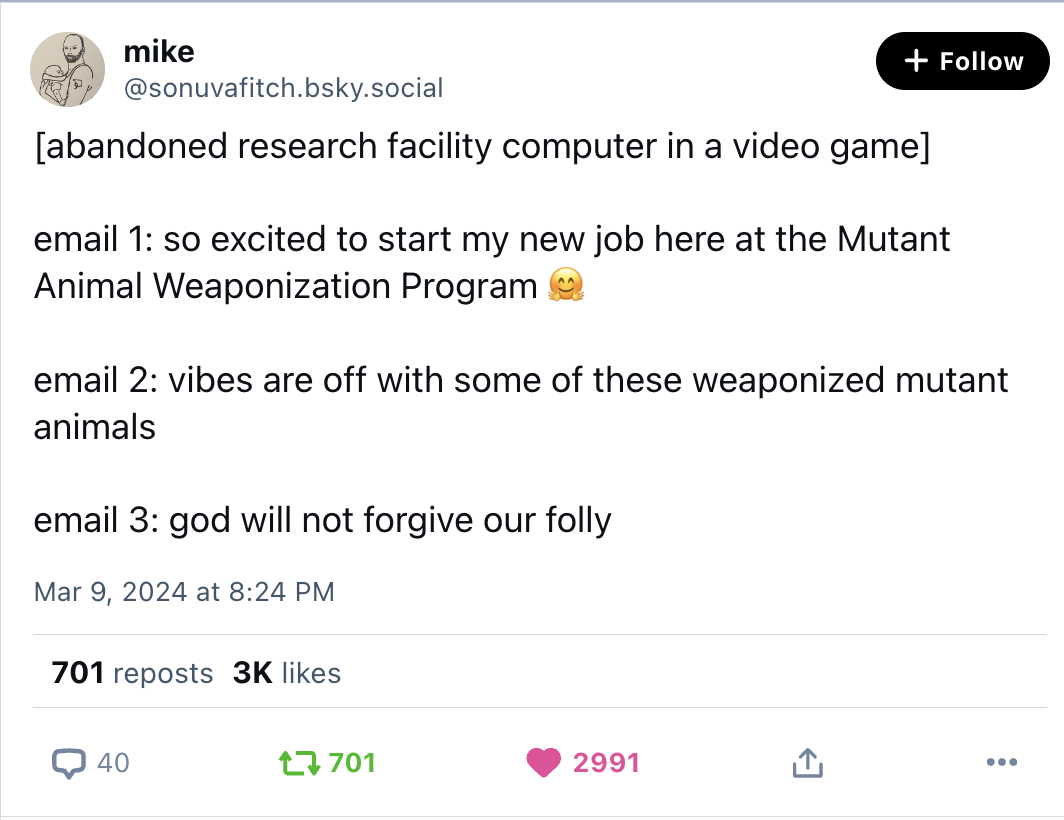
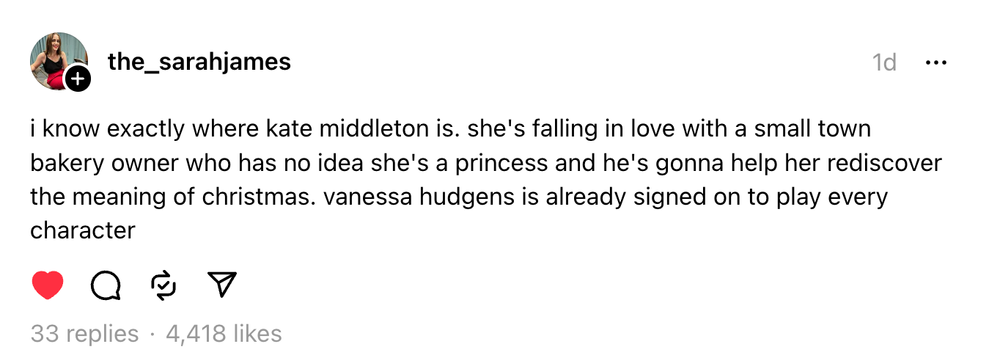
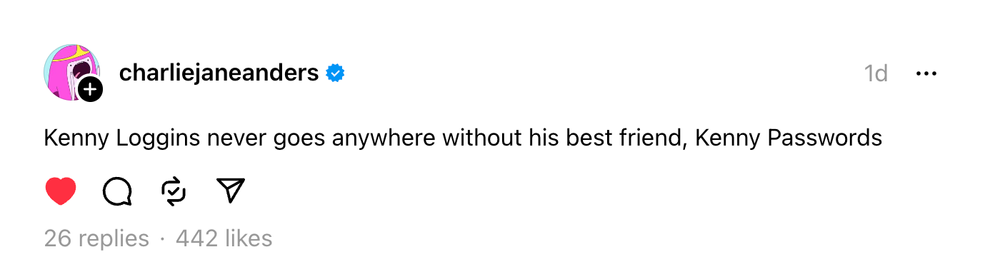
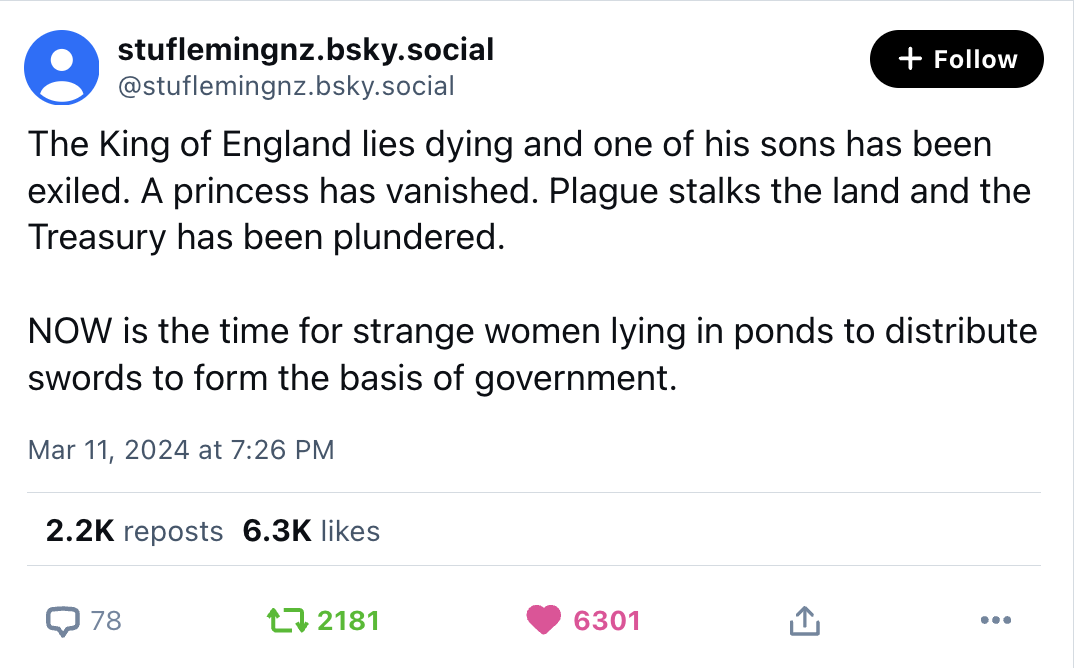
I’m not bullish on squeezing long-form content into a microblogging platform, whether on Mastodon or X. Long-form content isn’t best consumed as part of a fast-moving stream of short updates.

Yes! This is an ongoing source of frustration for me. I often write posts that are 600-1,000 characters. That’s not long-form by real-world standards, but it’s slightly too long for Mastodon, Threads, Bluesky and the micro.blog timeline, and the resulting posts are ghastly.

Facebook doesn’t have those length limitations, but it also doesn’t permit simple hypertext like links, blockquotes, headers and boldface.

Tumblr is a full blogging platform, without length limitations and with great support for hypertext and embedded media. But it has user-interface and community conventions that seem to be offputting to most people. Also, Tumblr seems perpetually on the verge of shutting down.

I want to publish once, and allow anyone to read what I write on whatever platform they like. Dave Winer calls this “textcasting,”, and it’s a great idea, though he focuses on the needs of the writers and I’m focused on the needs of the readers. (I imagine Dave might say the needs are the same.)

Also, the Web doesn’t seem to have a universal standard for letting folks know you’ve replied to or mentioned them in an article — nothing like @mentions on Mastodon or Facebook tagging. So for this post,, I guess I’ll tag Ben Werdmuller and Dave Winer in Mastodon or Threads, as well as Manton Reece, who builds and runs micro.blog and whose post flagged Ben’s comments to me.

These limitations are frustrating! Why can’t everything be more fluid?
Cory Doctorow: “Bullies want you to think they’re on your side: Bosses (not migrants) take workers' wages, and corporations (not readers) want writers' money." [pluralistic.net]

You know what’s an excellent thing to do when you’re having trouble sleeping? Go through your notes apps and clean up the scraps of ideas for posts.

And now, back to bed to see if I can stack Zs for a couple of hours until the alarm.

I keep bags of dog treats next to the bags of dried fruit that I put in my cereal in the morning. The packaging looks very similar. That is going to make for an interesting breakfast for me one day.

The “True Grit” movies came up in a conversation so I went down an Internet rabbit hole

This 2010 article in The New York Times includes a conversation with Charles Portis, the author of the novel on which the movies were based:

Portis’s characters have a self-conscious manner, a homespun formality of speech, that comes from the effort to inhabit grandiose roles: lone avenger on a quest; nefarious outlaw; besieged moral exemplar. If that sounds like a description of Cormac McCarthy’s characters, the great difference is that Portis finds comedy in the aspiration to heroism, and his characters are forever plagued by a suspicion of their own ridiculousness.

Portis, who died in 2020, was called reclusive, but it seems more likely that he just didn’t like self-promotion, doing interviews, publicity, celebrity and the other trappings of fame.

The Washington Post describes how Portis became a writer: It started when he attended college after military service.

“You had to choose a major, so I put down journalism…. I must have thought it would be fun and not very hard, something like barber college — not to offend the barbers. They probably provide a more useful service.

Do you prefer video on or video off for remote meetings?

I prefer video on but I would not demand it. And I don’t even tell colleagues I prefer video on because I don’t want to pressure anyone.

If most people’s videos are on, I turn mine on—and vice versa. It’s an etiquette dance I find mildly annoying, like when you see someone you haven’t seen in a long time and you have to choose between a handshake and a hug.

I’ve been WFH for literally decades. When I’m WFH, T-shirts and sweatshirts are appropriate attire for almost all meetings. Sometimes, when I’m introduced to a new client, I’ll throw on my “Zoom shirt,” a blue Oxford button-down otherwise thrown over a chair in my home office.

Early in the Zoom era, I wondered why many folks wore hats on meetings. And then I realized: They were working from home, didn’t comb their hair, and still had bedhead. This is not usually an issue for me—I’m half-bald and have my remaining hair in a Generic Middle-Aged White Dude Buzzcut.

The White Castle System of Eating Houses [99percentinvisible.org]. White Castle, founded more than a century ago in Wichita, Kansas, invented the American system of fast food.

Why Do So Many Coffee Shops Look the Same?

On the Decoder Ring podcast, host Willa Paskin interviews writer Kyle Chayka, author of “Filterworld: How Algorithms Are Flattening Culture.” He discusses how the Instagram algorithm has made public spaces more generic and we have come to prefer those spaces.

In today’s episode, Kyle’s going to walk us through the recent history of the cafe, to help us see how digital behavior is altering a physical space hundreds of years older than the internet itself, and how those changes are happening everywhere–it’s just easier to see them when they’re spelled out in latte art.

[slate.com]

Adolfo Ochagavía is an “undercover generalist." [ochagavia.nl] To find work as a generalist, he says, you need to present yourself as a specialist.

I have found this to be true. Don’t tell people you can do anything. People don’t need “anything”—they have specific problems that need to be solved. Later, when they learn to trust you, you can branch out with more general work.